Monday, April 24, 2017

10 Signs It's Time to Move to A New City:


Moving is one of the hardest things to do. Uprooting your life and starting another one comes with a mixture of feelings: part of you might feel optimism for opening a new chapter in your life while another part of you may feel like you’ve quit or failed. Regardless of whether you get a new job or just need a change from the same old shit, there comes a time when you have no choice but to move.
Timing a move is tricky. You’ll be hesitant to leave behind the life you’ve built for yourself, the relationships you’ve forged, and the job it took you forever to get. On the other hand, you'd hate to miss out on new opportunities because you dragged your feet. No one can tell you when it’s time to seek greener pastures, but we can provide some signs that it might be time to go. Sometimes a change of scenery is just what you need. Find out if the grass really is greener with these 10 Signs It’s Time to Move to A New City.


Your Passion Lives Elsewhere



It is really easy to bargain with yourself when it comes to your dreams. No matter which way you cut it, the television industry lives in Los Angeles and New York, web start-ups congregate in San Francisco, and oil men reside in Texas. Though it is possible to be a huge fish in a smaller pond (just ask some of the best filmmakers in New Orleans and Austin), it isn't necessarily the best move. If there is a better place to be to do what you love, whether it be composing sonnets or catching trophy winning trout, it might be time to find your Mecca. We all know that the Internet has put careers within reach of people working remotely, but be real about what you're giving up if you don't live where the action is. Yes, you can design apps in your shack in rural North Dakota, but is that giving you the best chance at success?

You Haven't Lived Anywhere Else



You don't know if you don't try. Though this sounds like the sort of thing your mother would say in an attempt to get you to join marching band or math club, it's still good advice. There are people out there (we all know at least a few of them) who know deep down that they want to live their entire life in their hometown. There are also those people who graduate college and decide that they'll live out their days in their college town. There's nothing wrong with a decision like this, but if you aren't absolutely sure where you want to spend your life, it can't hurt to try something new. The worst thing that can happen is that you don't like it and opt to move back. If you move back, at least you'll be able to replace "What if?" with "I tried it and it sucked."

There's Some Place You've Always Wanted to Live



When I moved to New York City, a friend said to me, "You know, there are New York people, there are L.A. people, and there are career people." I often find myself thinking about how right he was. One of the most annoying parts of living in New York City is listening to people who "just love New York," and believe that it is "the greatest city in the world." While you may not always see the appeal of trying to find a bar that isn't packed to the gills as the harsh winds cool your dollar pizza or being forced to listen to a mariachi band while waiting for an hour to catch a weekend subway, some people honestly love it. I like to think I'm a "career person," in that I could make rural Minnesota work if I had to (apologies to my Vikings fans, you guys already have it hard enough). The point is, if there's a place that you love, why not live there? We've all met some older person who constantly sings the praises of their favorite city and has never spent a meaningful amount of time there. They love London or Paris or Beijing so much, yet they've only been once or twice. If there is a place you want nothing more than to spend your time in, why aren't you there? Regardless of your concept of the afterlife, you likely don't believe you'll be spending it in San Francisco or Seattle, so if there's some place you want to be, life's too short not to be there.


Your Goals Have Changed


In a society where we pour years of study and thousands of dollars into our chosen fields, it almost feels like a sin to abandon your path. Nevermind that you likely chose your career at eighteen years old. Think about the other things you liked when you were eighteen. Do you like any of the foods, bands, or clothes you were into back then? For those of you who aren't yet eighteen, think back to when you were twelve to get an accurate picture of what I'm talking about. Unless you suffer a worse case of arrested development than Buster Bluth, the answer is likely no. What reason do you have to stay a veterinarian now that you are a decade removed from that transformational experience you had rescuing a cat from a tree as a teenager? If you decide that what you really want to do (this year) is handcraft scented candles, then by all means go to the best city for handcrafted candle crafting and give it your best shot. If you go back to being a veterinarian, at least you'll have cool stories to tell about that one year you spent crafting candles.

You Hate the Weather
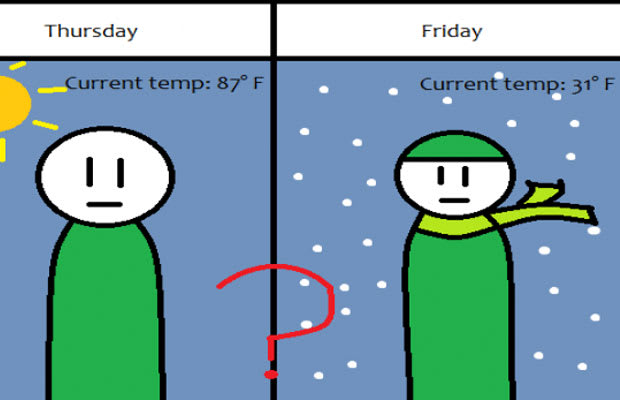


Don't roll your eyes at me. I can see you muttering "hashtag first world problems" to yourself as you read this. Here's the thing: we live in the first world, so we can have first world problems. If you absolutely hate the cold, can't stand the heat, or can't bear the wind, why are you still putting up with it? I can't count the number of times someone from L.A. has moaned to me how much they "miss seasons." If you've ever spent a winter in a Northeastern city, between the chattering teeth and strings of curse words, you'll hear people swear they are moving before next winter. Obviously, there are probably higher priorities when choosing where to live than the climate, but if it will make you happier, why not at least consider whether weather might further your life satisfaction? Now consider it three times fast.

Someone You Care About Is There
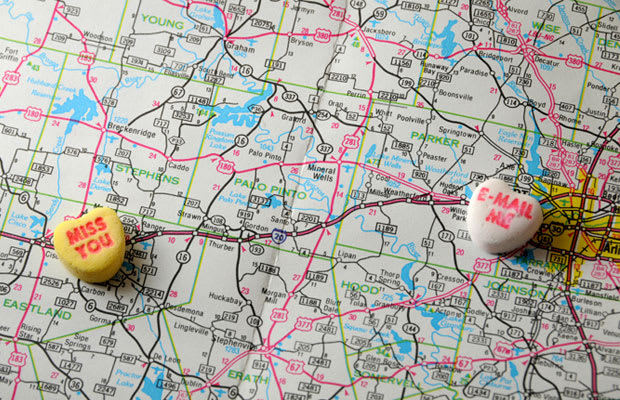


No one likes long distance relationships. That's why most of them end with one party hooking up with a fellow graduate student, co-worker, or cult member. That doesn't mean they can't work, but by definition, they aren't ideal. We could engage in some macho-posing here and trot out the old line that you shouldn't let a woman tell you what to do, let alone move for her, but let's be real here. It is now the twenty-first century and your lady likely has a career she cares about. If you work for a multi-national corporation with campuses in every major city or you work from home, it might be time to consider moving where she needs to be to succeed. If your girl gets into the best graduate school, lands her dream job, or has a burning desire to start a deep sea fishing business, why not try it with her? You can collect unemployment in any state, dawg.


You're Ready To Start A Family


The last thing most young men want to think about is starting a family, and if you're in the confirmed bachelor camp, feel free skip to the next slide. Then again, you've already read this far, so you could just keep reading. It's up to you. Anyway, if you've graduated college, you're going to see a few couples move to the suburbs and take on mortages in the next year or so. If you're an artist type or super career-driven, you'll tend to associate this with giving up or failure. Just a heads up: when you visit the people that make this choice and you see their huge houses and their happy children, you won't feel like it's them who failed. I'm not here to tell you that if you don't start a family you'll end up an empty husk on the corporate ladder. Bachelorhood remains amazing, from the casual sex to eating pizza for breakfast. All I'm saying is if you're feeling it's time to pull the "house and two and a half kids" card, no is going to fault you for it. In fact, your friends who are still downing beer by the pitcher and picking up girls at clubs might even be a little bit jealous.

You Realize You Were Running Away



Living in New York, every three months or so, you help pack a U-Haul for someone moving back to where they grew up. Even in our constantly changing world, 60% of people stay in the same state where they were born, and it's okay to join them. You'll meet a fair number of people who realize, after some time spent in distant locales, that they were always running away from something, and that it's time to go home. The fear of stagnation motivates many people to up and leave their hometown and try something else. Sometimes the drive to escape parents, ex-girlfriends, or slacker friends who hang out at the gas station leads them to pack up their parents' station wagon and head elsewhere. For many people, there comes a time to return after they've gained knowledge that they couldn't find around the block from their childhood home. There's no shame in moving back to where you lived before, as long as you come back having learned something about yourself.

You Have No Reason to Stay



You might look around some day and realize that the reason you moved somewhere no longer exists. Maybe you moved to Chicago with your college buddies after school, and one by one they have left. It could be that you moved to New York to act, but you've done a hell of a lot more waiting tables than acting over the last five years. Maybe the girlfriend you moved to Philadelphia for has become your ex-girlfriend. I'm not advocating running way from your problems, or hopping a few exits down the interstate every time a relationship implodes or you're handed a pink slip. On the other hand, if you're sitting at the coffee shop one day and your realize that your life would be no different sitting in a coffee shop in Austin or Boulder, maybe it is time to find a place that feels like it matters.


You Complain About Your City All the Time


Don't get me wrong, everyone hates where they live a little bit. In New York, bitching about your rent and the subway's tardiness are as common as complaining about the weather. In order to live in Los Angeles, you are contractually obligated to bemoan the shallowness of the populace twice a day. In Pittsburgh, you either complain about how the Steelers are playing or you complain that everyone is obsessed with the Steelers. If your complaints about a city go beyond your standard bitching and you start to sound like the bitter old guy who sits at the diner alone yelling at no one in particular, it might to check in with yourself. If you hate the transportation, the politics, or how nothing happens after 10 p.m., those things aren't likely to change any time soon. Maybe absence will make the heart grow fonder, and if that happens, you can return to hating everything about your city with a renewed energy and vigor once you've tried a new place and hated it too.

Wednesday, April 19, 2017

Best Cities in the US for Young Women to Live and Work at:


When a young, motivated, single woman is heading out into the world on her own, there’s a lot she’s looking for in her new city — and while a healthy population of singles might be up there, there are a lot of other factors to consider. Wage parity and job opportunities, relative safety and low crime rates, access to entertainment and culture, and women’s comprehensive health care are high on most women’s lists as well. Ladies, take notes – here are the cities most likely to give you what you’re looking for.

New York, NY

Yes, yes. Of course, you’re well aware that the career opportunities in NYC are top-notch, the culture and dining boast pretty much everything you could imagine, and women are promoted up the managerial ladder with less struggle than many other places in the country. A little-known fact: women are paid on average 86 cents per dollar a man makes, bringing this city into the top end of the wage parity percentile. Safety in NYC for a woman depends on where you choose to live, but New York is no longer the dangerous place it was believed to be — in 2009, it was ranked the 269th most dangerous. That means there are 268 more dangerous cities out there, ladies. The stats also say that dating in NYC is in women’s favor, with fewer single women than men — and if you’re of the hipster persuasion (or find them intriguing), NYC is one of America’s most hipster cities — specifically Brooklyn.
The one downfall to New York? If you are a single mother, the cost of childcare is prohibitive unless you land one of those high-paying managerial jobs.

Baltimore, MD

Such a tiny state, such big opportunities. Although Baltimore may not be one of the safest cities on the list, nearly half of the women in Maryland who are employed are in managerial ranking positions with an exceptionally high number of graduate degrees (more than San Diego or Philadelphia!). The wage gap in the state is the second smallest in the nation, meaning those women are getting paid appropriately for their efforts. The state has excellent access to top-notch health care for women, too. What’s more? It has been rated one of the top 7 cities for singles. Who knew such a small state had such a thriving dating scene?

Denver, CO

Fitness is king in Denver, where pretty much everyone can be seen out cycling, skiing, running, or any other number of creative ways of staying healthy. Unemployment is at a super low of 4%, meaning your job opportunities are prime — and there is plenty of access to great dining and entertainment opportunities, making this one of the more fun cities if these things are top on your priority list. You might just meet your beau out on the trail, or at spin class, or at the juice bar, or in your running club, or… The only downside is Colorado’s policies around women’s access to healthcare are a little questionable, and the cost of childcare is high. Single mothers, think hard about moving to Denver if you’ll be needing childcare regularly.

San Francisco, CA

The Bay gets knocked big time for an extremely high cost of living and near-impossible rental market, but it makes our list because it was rated No. 2 on the American Human Development Index – a scale that measures information on women’s educational attainment, life expectancy, and median earnings. The wage gap in California is 7th in the nation, with women earning 86% of every dollar that men make for the same work, meaning a career woman can make find success in this city. San Fran has also been ranked as one of the fittest cities in the country, as well as one of the best cities to get rich for those who are seeking their fortune and the second safest large city in the country for women. The Bay Area is also known as one of the best places to find a single, rich man — if you don’t want to date him, maybe he can at least share some of his secrets to success…

Boston, MA

Back to that American Human Development Scale, Boston ranks number two in the nation. It has great public transit, a bustling economy with opportunities in pretty much every sector from top-notch higher education to tech. The city is overflowing with cultural opportunities and world-class dining, as well as a Harvard-educated dating pool for young professionals. Though the state doesn’t have wage parity yet, Boston passed an initiative to eliminate the wage gap — which is saying something about how this progressive city feels about its ladies in the workforce. They may need to extend that initiative to consider childcare assistance too, as the average working mother pays more than 50% of her salary towards caring for the kids.
 
Ready to make your move? Hire interstate movers to make the move smooth and easy, so you can focus on being the independent woman you are in your new city.

Monday, April 3, 2017

How To Pack Books In 7 Simple Steps:


Most of the people who are getting ready to move out of their homes don’t always stick a High Priority label to the job of packing books. Such an obvious underestimation may be the direct result of 1) people having too many things on their minds to worry about packing and moving their books, 2) people thinking that packing books for a move is the easiest move-related task in their calendars, and 3) people owning too few books to really be intimidated by the book packing job ahead of them.

While it’s true that to pack books when moving house is relatively easier than to pack kitchen plates and glasses for a move, you still need to know the basic book packing principles and safety rules to prevent any damage to your favorite reads and prolong the shelf life.

Moving house is a notoriously chaotic period in life when even seemingly simple tasks can go terribly wrong. The next 10 simple steps will show you the best way to pack books for moving.

Step 1. Optimize your book collection

Books cannot be broken easily like kitchen plates or glass vases, so what’s all the fuss about packing and moving books? Well, when packed together in a box, books become super heavy and that weight alone can cause a number of problems for you on moving day.

A single book page is almost weightless, one book is not really heavy, get 5 books together and things are starting to feel differently. Cram 10 books in one tight place and you’ll understand why moving books could prove to be harder than you expected. And since the final moving price will be based primarily on the move distance and the total shipment weight, you should seriously consider lowering that overall weight any way you can.

Do you really need to take all the books you own? First and foremost, go through your book collection one by one and select only the copies you must have with you at all costs – prized collections, favorite books and gifts from dear friends will surely make it to your new home.

Step 2. Sort and group your books


Sorting your books is a step you should not skip.
Time can kill the value of books – either literally or figuratively speaking, or maybe even both. You may find out that some of your books have been seriously damaged with time, especially if they have not been properly stored. Other copies may have lost the original worth they had when you first bought them. Either way, it’s time to sort out your books into two large piles: TAKE and LEAVE BEHIND.

Below, we’ll give you great tips for packing books when moving house (the TAKE pile) but let’s first say a few words about what you should do with the LEAVE BEHIND stack.

Gift to friends or donate to charities any books you won’t ever need again but are still worthy of being read by other people. Where to donate used books? Check whether local libraries, hospitals, schools, nursing homes or charity shops will be willing to take the books you’re not taking with you.
Consider recycling any paper copies that are too worn out, damaged or worthless to be enjoyed by anyone but your local recycling center.
Don’t forget to group the books you’re moving by size so that they can fit nicely into the boxes.

Step 3. Get proper supplies for packing

Even though packing books for a move may not the toughest job in your packing calendar, you’re still going to need the right packing materials to keep harmful damage away from your favorite reads. To finish your task quickly and to avoid time-wasting interruptions, get your hands on:

Book boxes. These cardboard boxes are not any special type of moving containers – rather, they just happen to meet 3 major requirements: 1) they are strong because they are made of thick cardboard, 2) they are small boxes with usual dimensions of 20’’ x 11’’ x 11’’ (medium-sized boxes should also do fine), and 3) they are perfectly clean, dry and free of any signs of pre-existing damage.
Packing paper. You’ll need clean and soft packing paper in order to pack valuable books, as well as to use as effective separators between rows of books already arranged in boxes.
Newspapers. Newsprint is the ideal filling material – abundant and free of charge.
Packing tape. Get at least 2 rolls of high-quality packing tape as it will be used for additional reinforcement for book boxes as well.
A marker pen. Label your packed boxes properly to make things easier for you upon arrival in your new home. /How to label your moving boxes like a pro/
Step 4. Prepare book boxes for increased efficiency

Before you can begin placing the already sorted and grouped books into cardboard boxes of the right size, let’s list the steps you need to take to make sure the moving containers are 100% ready for use. The main things to consider when preparing the cardboard boxes you’ll use to transport your books are:

Take a closer look at the boxes you plan to use for transporting your books – inspect each book box carefully and make sure none of them is damp or has holes, tears or other signs of excessive wear. Remember that books are too heavy to be moved in largely unreliable packing boxes.
Apply an extra layer of packing tape to the bottom of each book box to ensure that no moving container will break under the considerable weight. Also, use tape to reinforce all side seams of the cardboard boxes too.
Place a couple of clean sheets of packing paper on the bottom of each container to serve as an initial insulating layer.
Step 5. Learn how to pack books for moving

The next easy steps will teach you how to pack books in moving boxes so that you won’t have any accidents during the move itself. Ultimately, you will want to open up the boxes after arriving in your new house or apartment and find the books exactly the way you have packed them.


Packing books is always more fun when a dear friend is willing to give you a hand, or a paw.
First of all, valuable books should be wrapped individually in soft packing paper. If you happen to own a few books of great sentimental value, you must keep them with you during the entire move.

The good news is that you can choose among 3 different ways to arrange your books in the boxes: upright, flat and spine down.
Upright. Arrange the books standing upright so that their open parts are facing the box sides. This is the way you would usually see books neatly arranged on bookshelves. Do not pack books with their open sides facing the inside of the book box.
Flat. This is a very safe way of packing books in moving boxes – you just stack them along the box sides. Don’t forget to place the heavier copies first and then arrange the lighter ones on top of them.
Spines down. This is the least recommended way to pack books in a box but if you decide to use it for some reason, always arrange the books with their spines facing the bottom of the moving container. Don’t do it the other way round as you risk damaging the bindings of your books forever.
Select the book packing method that seems the quickest and easiest for you, and then stick to it until the end.
Avoid arranging books too tightly one next to the other as that could cause you to damage a copy while you’re trying to take it out upon arrival.
The moment you finish packing one row, place a couple of sheets over the books and start a second row of books if the box allows it. The main idea is to always try and keep the pages of different books from touching in a direct way.
When you’re done packing books for shipping, fill any large gaps inside the box with crumpled pieces of newspaper to ensure no printed works move inside the container during the trip.
Place one final sheet of clean packing paper on the very top, then close the lids of the book box and tape it securely.
Use your black marker to label the boxes you’ve already packed – write BOOKS and the destination room.
Step 6. Pack books in a suitcase

Using strong cardboard boxes to pack books for moving is the classic approach that won’t go out of fashion anytime soon – it’s the book packing method that people automatically think of whenever they are forced to transport their book collections to a new address. However, packing books in moving boxes has two major disadvantages: 1) the cardboard containers are still susceptible to damage and 2) the book-filled boxes need to be either carried around in hands or wheeled out by being stacked on a moving dolly which will additionally make things more laborious and time-consuming.

What if you could use a much stronger and bigger moving container equipped with its own wheels? Actually, you can. If you own a travel suitcase with wheels at the bottom, then take full advantage of it by filling it with the heaviest books you can find in your TAKE pile. To pack books in a suitcase is pretty easy and quite straightforward – you don’t even have to label it once you’re ready.

Step 7. Follow the safety rules


Packing books is not overly complicated but you still need to follow some basic packing and safety rules.
Knowing how to pack books when moving house is all about keeping the main safety tips in mind. Remember that books can still be ruined if you fail to follow some basic rules for packing books for a move:

Keep the weight of a single book-filled box under 40 pounds. Again, books are heavier than you think.
Use small to medium sized boxes for packing books properly.
Always double-tape the seams of book boxes as a precaution, even if those containers are brand new.
Always place the heaviest books on the bottom of a cardboard box.
Use extra care when packing valuable books /antique books or rare books/ – it’s best if you wrap them up in soft packing paper and transport them yourself in a special prized-collection-of-first-editions box.
Despite these great tips for packing books for moving, if you still have doubts that you will manage to pack and move your books on your own, then have professional packers and movers take care of your book collection for you.